The Aye-Aye: Madagascar's Strangest Primate
ANIMALS
12/14/20253 min read
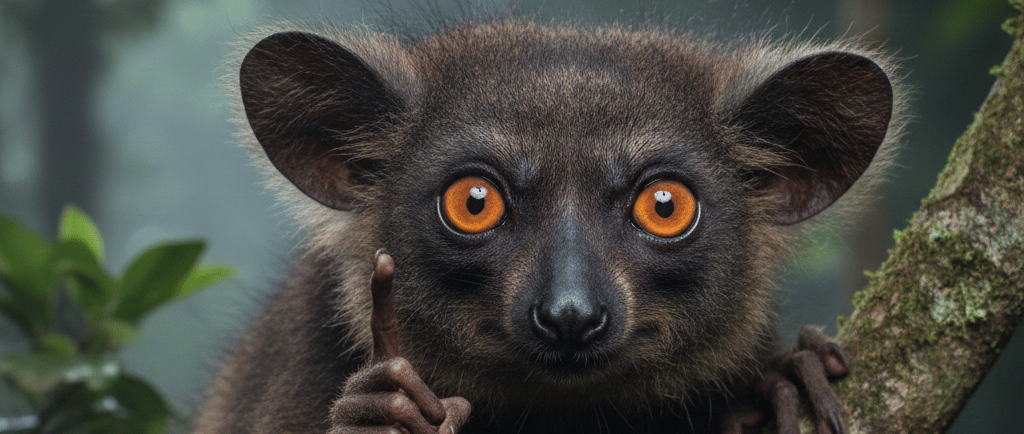
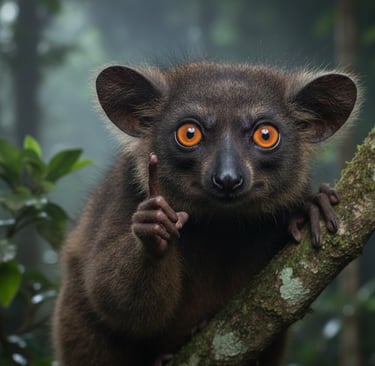
If you've never heard of the aye-aye, you're in for a treat. This bizarre little creature looks like Mother Nature threw together a bat, a rodent, and a gremlin, then decided to give it one incredibly creepy superpower. Found only in Madagascar, the aye-aye has earned its reputation as one of the world's most unusual primates.
What Does an Aye-Aye Look Like?
Picture this: a cat-sized animal with scraggly black or brown fur that sticks out in all directions. Add enormous, luminous eyes that glow yellow-orange in the dark, giving it a permanently startled expression. Then there are those ears—huge, leathery bat-like ears that can rotate independently to pick up the faintest sounds.
But the real showstopper? That middle finger. The aye-aye's third finger is long, skeletal, and looks like something straight out of a horror movie. It's three times longer than the other fingers and moves in ways that seem almost mechanical. If you saw one tapping in the shadows at night, you'd understand why local legends often paint these creatures as harbingers of bad luck.
The Aye-Aye's Bizarre Feeding Habits
Here's where things get really interesting. The aye-aye is the only primate that uses echolocation to find food—a hunting method more commonly associated with bats and dolphins. Using that creepy elongated middle finger, it taps on tree bark at a rate of about eight times per second, listening with those massive ears for hollow spaces where insect larvae might be hiding.
Once it detects a promising spot, the aye-aye uses its rodent-like front teeth (which never stop growing) to gnaw through the wood. Then it inserts that spindly finger into the hole and uses a hook-like claw to fish out the grub. It's like watching a tiny, furry fisherman at work.
Their diet isn't limited to insects, though. Aye-ayes also feast on coconuts, mangoes, lychees, and nectar. They're particularly fond of the ramy nut, a Madagascar native. When feeding season hits, you might spot multiple aye-ayes gathered around the same fruiting tree, which is rare since they're typically solitary creatures.
Life in the Treetops
Aye-ayes are strictly nocturnal, spending their days curled up in ball-shaped nests built high in the forest canopy. These nests, called dreys, are constructed from leaves, vines, and branches. Each aye-aye usually maintains several nests throughout its territory, rotating between them like a woodland real estate mogul.
At night, they become active, traveling through the trees with surprising agility despite their somewhat awkward appearance. Their bushy tails, longer than their bodies, help them balance as they move from branch to branch in search of their next meal.
Why the Aye-Aye Needs Our Help
Unfortunately, being strange-looking hasn't done the aye-aye any favors. In Madagascar, traditional beliefs hold that aye-ayes bring misfortune or even death. Some villages believe that if an aye-aye points its long middle finger at you, you're cursed. This superstition has led to aye-ayes being killed on sight in many areas.
Habitat loss adds another layer of trouble. Madagascar's forests are disappearing at an alarming rate due to slash-and-burn agriculture and logging. The aye-aye is now listed as endangered, with population numbers difficult to estimate due to their secretive, nocturnal nature.
Conservation groups are working to protect remaining forest habitats and educate local communities about the aye-aye's ecological importance. These weird little primates play a crucial role in controlling insect populations and dispersing seeds throughout Madagascar's forests.
A Creature Worth Celebrating
Yes, the aye-aye might give you nightmares at first glance. But once you learn about its remarkable adaptations and unique place in the natural world, it's hard not to be impressed. This peculiar primate has evolved some of nature's most creative solutions to survival challenges.
The aye-aye reminds us that biodiversity comes in all shapes and sizes—some stranger than others. Protecting Madagascar's forests means protecting these wonderfully weird creatures and all the other unique species that call the island home. After all, a world without aye-ayes would be a little less magical, even if they do look like they crawled out of a fantasy novel.
Contact
© 2025. All rights reserved.