The Dragon Blood Tree of Socotra
TREES
11/30/20253 min read
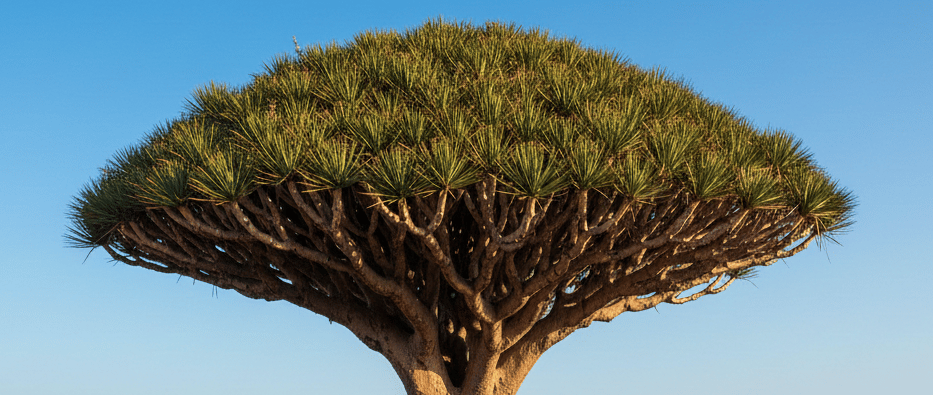
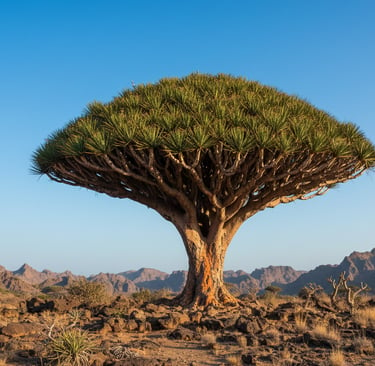
If you've ever scrolled through pictures of the world's most unusual trees, you've probably stopped dead in your tracks at the Dragon Blood Tree. And honestly, who could blame you? This thing looks like it belongs on another planet.
What Makes the Dragon Blood Tree So Special?
The Dragon Blood Tree (Dracaena cinnabari) is native exclusively to Socotra, a remote island off the coast of Yemen. Picture this: a tree that looks like someone flipped an umbrella inside-out and planted it in the ground. The canopy spreads out in this perfectly symmetrical, mushroom-like shape that seems almost too perfect to be real.
But here's where it gets even more interesting. When you cut into the bark of a Dragon Blood Tree, it "bleeds" a deep crimson resin. Yes, you read that right—crimson resin. Ancient people weren't being dramatic when they named this tree. They genuinely thought it was dragon's blood.
The Legendary Red Resin
So what's the deal with this mysterious red sap? For thousands of years, people have harvested dragon's blood resin for all sorts of uses. The ancient Romans used it as medicine and dye. Traditional healers in the Middle East incorporated it into remedies for everything from wounds to digestive issues. Artists ground it into pigment for paintings and varnishes.
Even today, you'll find dragon's blood resin in some natural cosmetics, incense, and traditional medicines. The locals on Socotra still harvest it sustainably, keeping centuries-old traditions alive.
How Does This Weird Tree Survive?
Here's the thing about Socotra—it's not exactly a lush paradise. The island is hot, dry, and pretty harsh. So how does the Dragon Blood Tree thrive there?
That umbrella-shaped canopy isn't just for show. It's actually a brilliant survival strategy. The dense crown provides shade for the roots and helps capture moisture from the occasional fog that rolls in from the ocean. The leaves channel any precious rainwater or condensation down toward the trunk and roots. It's like the tree designed its own personal water collection system.
The trees also grow incredibly slowly and can live for hundreds of years. Some scientists estimate that the oldest Dragon Blood Trees on Socotra might be 500 years old or more. These aren't trees in a hurry.
Why You Should Care About Dragon Blood Trees
I'll be straight with you—these trees are in trouble. The Dragon Blood Tree is currently listed as vulnerable on the IUCN Red List. Climate change is making Socotra even drier, and the trees aren't reproducing as successfully as they once did. Young saplings struggle to survive in increasingly harsh conditions.
The island of Socotra itself is sometimes called the "Galápagos of the Indian Ocean" because it's home to so many unique species found nowhere else on Earth. About one-third of Socotra's plant life exists only on this island. When we lose these trees, we're not just losing a cool-looking plant—we're losing an irreplaceable piece of our planet's biodiversity.
Can You See Dragon Blood Trees in Person?
Visiting Socotra isn't the easiest trip to plan, but it's possible for adventurous travelers. The island has limited infrastructure, and you'll typically need to join an organized tour. But for those who make the journey, seeing these otherworldly trees in their natural habitat is reportedly unforgettable.
If a trip to Yemen isn't in your immediate future, you can find Dragon Blood Trees in some botanical gardens around the world. They're not common, but a few specialty collections have managed to cultivate them.
The Bottom Line
The Dragon Blood Tree is proof that nature can be stranger and more wonderful than anything we could dream up. From its upside-down umbrella shape to its crimson resin, this tree has captivated people for millennia—and it continues to amaze everyone who encounters it.
Let's hope conservation efforts can protect these ancient, remarkable trees so future generations can marvel at them too. Because a world without Dragon Blood Trees would be just a little less magical.
Contact
© 2025. All rights reserved.