The Elusive Amur Leopard: Rarest Big Cat in the World
ANIMALS
11/20/20253 min read
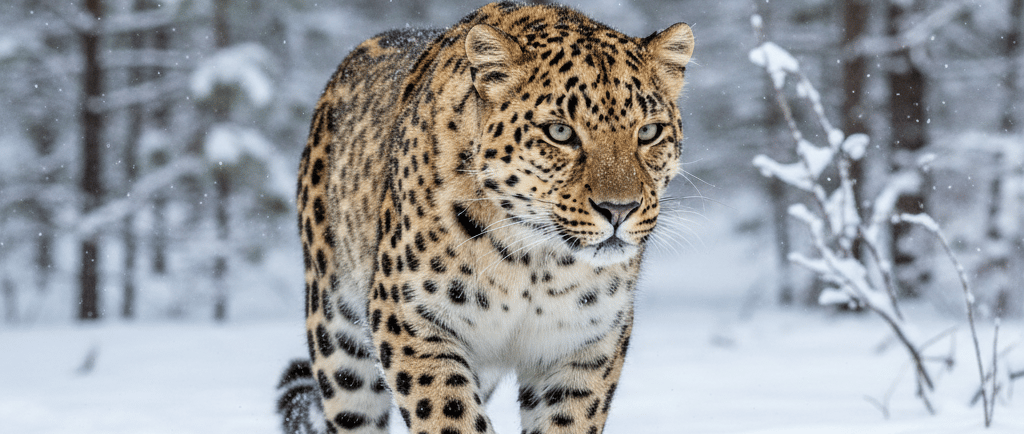
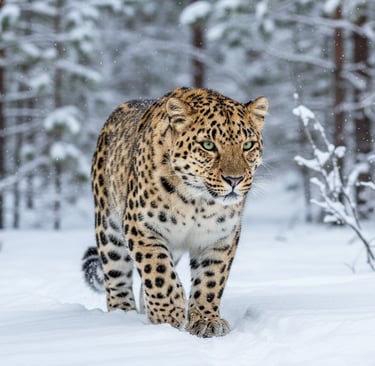
If you're fascinated by wildlife conservation stories, the Amur leopard might just break your heart and inspire you at the same time. This stunning big cat holds the unfortunate title of being the world's rarest leopard subspecies, with fewer than 120 individuals remaining in the wild. But here's the incredible part: their numbers are actually increasing thanks to dedicated conservation efforts.
What Makes the Amur Leopard So Special?
The Amur leopard (Panthera pardus orientalis) is like the winter warrior of the leopard family. These gorgeous cats sport thick, pale cream-colored coats covered in widely spaced rosettes—perfect camouflage for their snowy habitat in the Russian Far East and northeastern China. Their fur can grow up to three inches long in winter, which is significantly thicker than their tropical cousins.
What really sets them apart? Those striking pale green or blue-green eyes and their absolutely massive paws that act like natural snowshoes. We're talking about a cat that's perfectly adapted to temperatures that would send most of us running for the nearest fireplace.
Where Do Amur Leopards Live?
These elusive cats once roamed throughout Korea, northeastern China, and the Russian Far East. Today, their range has shrunk dramatically to a small region along the border between Russia and China, primarily in the Land of the Leopard National Park in Russia's Primorsky Krai region.
The remaining wild population inhabits temperate forests where winter temperatures can plunge to -30°F. It's not exactly a tropical paradise, but the Amur leopard has made it work for thousands of years.
Why Are Amur Leopards So Rare?
The story of the Amur leopard's decline is frustratingly familiar. Habitat loss, poaching, and prey depletion have pushed these magnificent cats to the brink of extinction. In the late 1990s, scientists estimated there were only about 30 individuals left in the wild. Thirty. Let that sink in.
Illegal wildlife trade remains a serious threat, with their beautiful spotted coats making them targets for poachers. Forest fires and human development have also fragmented their already limited habitat, making it harder for leopards to find mates and maintain genetic diversity.
A Conservation Success Story in the Making
Here's where things get hopeful. The Amur leopard population has quadrupled since those dark days of the 1990s. Conservation organizations, the Russian government, and local communities have joined forces to protect critical habitat and crack down on poaching.
The establishment of Land of the Leopard National Park in 2012 created a protected corridor where these cats can roam more safely. Camera trap studies show that the population is growing, with cubs being spotted regularly—a sign that breeding programs and habitat protection are working.
China has also stepped up, creating protected areas and working with Russia on cross-border conservation initiatives. When countries collaborate like this, endangered species have a fighting chance.
What Can You Do to Help?
You don't need to live in Siberia to make a difference for Amur leopards. Supporting wildlife conservation organizations that work on the ground in leopard habitat is a great start. Many groups offer adoption programs where you can symbolically adopt an Amur leopard and contribute directly to conservation efforts.
Spreading awareness matters too. The more people know about the Amur leopard's plight, the more pressure there is on governments and organizations to prioritize their protection. Share their story, educate others, and advocate for wildlife conservation policies.
The Bottom Line
The Amur leopard reminds us that even when species are pushed to the edge, recovery is possible with commitment and action. These solitary, mysterious cats are clawing their way back from near-extinction, one cub at a time.
Yes, they're still critically endangered. Yes, they face enormous challenges. But they're also survivors, adapted to one of the harshest environments on Earth. If we keep supporting conservation efforts and protecting their habitat, maybe—just maybe—future generations won't have to call them the world's rarest big cat anymore.
That would be a conservation win worth celebrating.
Want to learn more about the world's rarest and most endangered species? Visit rarelifeforms.com to discover fascinating stories about incredible animals fighting for survival and how you can help protect them.
Contact
© 2025. All rights reserved.