The Fiji Banded Iguana: A Hidden Island Treasure
REPTILES
11/24/20253 min read
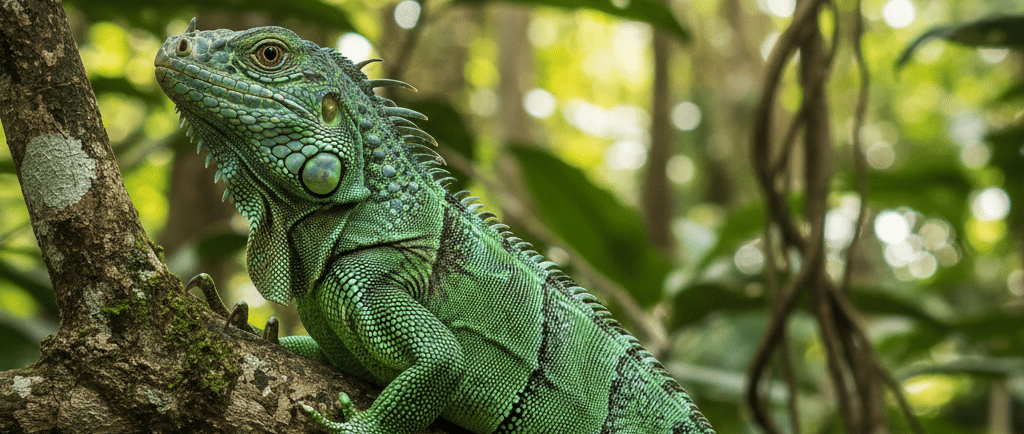
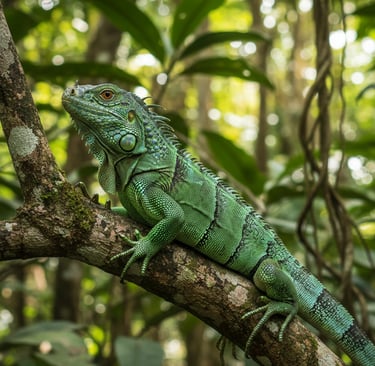
If you've ever dreamed of spotting a real-life dragon, the Fiji Banded Iguana might be the closest thing you'll find. This stunning reptile, with its vibrant emerald-green body striped with brilliant blue-white bands, lives exclusively in the lush forests of Fiji's islands. It's one of those creatures that makes you wonder how something so beautiful evolved in such a remote corner of the world.
A Splash of Color in the Canopy
The first thing that strikes you about the Fiji Banded Iguana (Brachylophus fasciatus) is its absolutely gorgeous coloring. The males are the real showstoppers, sporting those distinctive pale blue or white bands that wrap around their bright green bodies like nature's own racing stripes. Females tend to be more uniformly green, which helps them blend into the forest canopy where they spend most of their time.
These iguanas can grow up to 24 inches long, including their impressive tail, which they use for balance as they navigate through the treetops. Despite their somewhat intimidating appearance, they're actually pretty gentle creatures who prefer to avoid conflict whenever possible.
Island Living at Its Finest
What makes the Fiji Banded Iguana truly special is where it lives. This species is endemic to Fiji, meaning you won't find it anywhere else on Earth. They inhabit the wet forests on several of Fiji's islands, including Viti Levu, Vanua Levu, and some of the smaller surrounding islands.
Unlike many iguana species that bask in the sun on rocks, these tree-dwelling lizards spend their days high up in the forest canopy. They're surprisingly arboreal, meaning they're perfectly adapted for life in the trees. Their strong limbs and sharp claws make them excellent climbers, and they'll often remain completely still for hours, making them incredibly difficult to spot even when you know they're there.
What's on the Menu?
The Fiji Banded Iguana is strictly herbivorous, which means it's all about that plant-based diet. These iguanas munch on leaves, flowers, and fruits they find in their treetop habitat. Their favorite foods include hibiscus flowers and the leaves of various native trees.
Interestingly, they play an important role in their ecosystem as seed dispersers. As they eat fruits and move through the forest, they help spread seeds to new locations, contributing to the health and diversity of Fiji's forests.
A Species Under Threat
Here's where things get a bit serious. The Fiji Banded Iguana is currently listed as endangered, and their population continues to face significant challenges. Habitat loss from logging and agricultural development has reduced their forest homes considerably. Introduced predators like mongooses, cats, and rats pose a serious threat to both eggs and young iguanas.
Climate change also presents new challenges, including more frequent cyclones that can devastate their island habitats. Conservation efforts are underway, including captive breeding programs and protected forest reserves, but these beautiful reptiles need all the help they can get.
Why They Matter
Beyond their obvious beauty, Fiji Banded Iguanas are an important part of Fiji's natural heritage. They're living symbols of the unique biodiversity that island ecosystems can produce when left to evolve in isolation for millions of years.
For the people of Fiji, these iguanas hold cultural significance as well. They appear in local folklore and are increasingly recognized as a flagship species for conservation efforts across the islands.
Seeing Them in the Wild
If you're planning a trip to Fiji and hoping to spot one of these incredible creatures, your best bet is to visit protected areas with experienced guides who know where to look. Remember, these iguanas are masters of camouflage, so patience is key. Even their bright colors help them blend into the dappled sunlight of the forest canopy.
The Fiji Banded Iguana reminds us that our planet still holds countless treasures worth protecting. These gentle, gorgeous reptiles deserve a future as bright as their brilliant bands.
Want to learn more about the world's rarest and most fascinating creatures? Visit rarelifeforms.com to discover more incredible species like the Fiji Banded Iguana and explore the amazing biodiversity our planet has to offer. From hidden island treasures to mysterious deep-sea dwellers, there's always something extraordinary to discover!
Contact
© 2025. All rights reserved.