The Kagu of New Caledonia: A Bird Like No Other
BIRDS
11/24/20253 min read
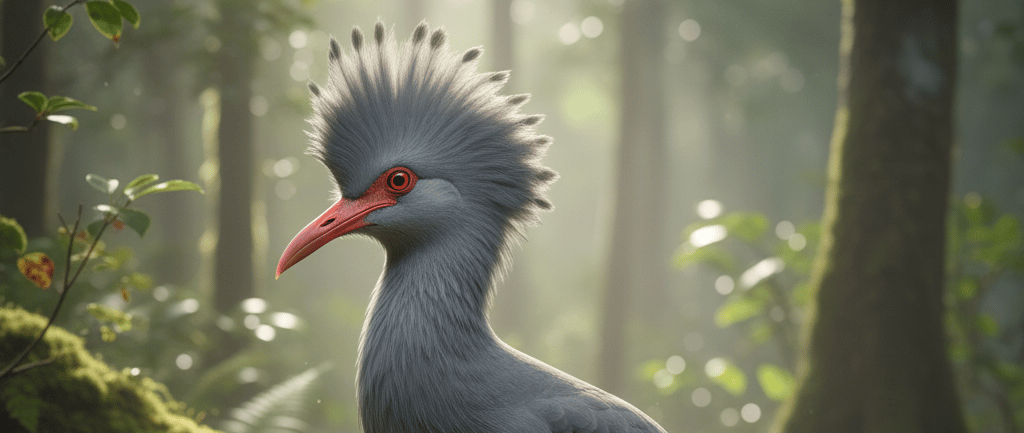
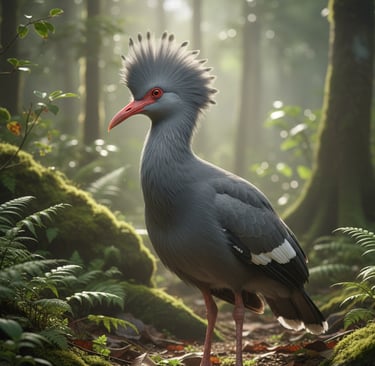
If you've never heard of the Kagu, you're not alone. This remarkable bird is one of nature's best-kept secrets, living exclusively on the remote island of New Caledonia in the South Pacific. But once you learn about this incredible creature, you'll wonder why it isn't as famous as penguins or parrots.
What Makes the Kagu So Special?
The Kagu (Rhynochetos jubatus) is unlike any other bird on Earth. Standing about 22 inches tall with striking pale grey plumage, this flightless bird looks like something out of a fantasy novel. Its most distinctive feature? A magnificent crest of feathers that fans out when the bird is excited or alarmed, creating a dramatic crown-like display.
But here's what really sets the Kagu apart: it's the only member of its entire bird family. That's right – the Kagu is so unique that scientists had to create a whole new taxonomic family just for it. Talk about being one of a kind!
A Bird That Can't Fly (But Doesn't Need To)
You might think being flightless would be a disadvantage, but the Kagu evolved on an island with no natural predators. Without threats from ground-dwelling mammals, these birds never needed to take to the skies. Instead, they developed incredibly strong legs perfect for running through the forest understory.
Their wings, while not used for flight, serve an important purpose during their elaborate courtship displays. Watching a Kagu dance is like watching nature's own ballet – they spread their wings to reveal striking orange and black stripes hidden beneath their grey exterior, creating a mesmerizing visual spectacle.
The Kagu's Unique Voice
If the Kagu's appearance isn't enough to capture your attention, its voice certainly will. These birds produce a call that's been described as everything from a rooster's crow to a dog's bark. Some locals say it sounds like laughter echoing through the forest at dawn.
Kagus are most vocal in the early morning hours, and their duets between mated pairs can be heard from quite a distance. It's one of the most distinctive sounds in New Caledonia's forests.
A Diet of Forest Floor Delicacies
Unlike many birds that feast on seeds or nectar, the Kagu is a carnivore with refined tastes. These birds hunt along the forest floor, using their long, sharp beaks to probe the leaf litter for worms, snails, lizards, and various insects.
Their hunting technique is fascinating to watch. Kagus move slowly and deliberately, tilting their heads to listen for the subtle movements of prey beneath the leaves. When they detect something tasty, they strike with impressive speed and precision.
The Fight to Save an Icon
Here's the hard truth: the Kagu is critically endangered. When humans arrived in New Caledonia, they brought dogs, cats, rats, and pigs – predators that the Kagu had never encountered before. Without millions of years of evolution to develop defense mechanisms against these threats, Kagu populations plummeted.
Today, fewer than 1,000 Kagus remain in the wild. Conservation efforts are underway, including predator control programs and captive breeding initiatives. The good news? These efforts are working, and Kagu numbers are slowly increasing.
Why We Should Care About the Kagu
The Kagu represents something precious: biological uniqueness that can never be replaced. If this species disappears, we lose not just a bird, but an entire branch of the evolutionary tree that exists nowhere else on Earth.
Beyond its scientific importance, the Kagu has become a symbol of New Caledonia itself, appearing on stamps, coins, and the territory's official seal. It's a source of pride for locals and a reminder that we share our planet with creatures that deserve protection.
Experience the Wonder
While the Kagu's remote habitat means most of us won't see one in the wild, learning about this extraordinary bird reminds us of the incredible diversity of life on our planet. Every species has a story, but the Kagu's tale of uniqueness, adaptation, and survival against the odds is particularly compelling.
The next time someone asks you about unusual birds, skip the usual suspects and tell them about the Kagu – a grey ghost dancing through the forests of New Caledonia, calling out at dawn, and reminding us that nature's creativity knows no bounds.
Want to discover more amazing rare species? Visit rarelifeforms.com to explore fascinating stories about the world's most extraordinary and endangered creatures. From mysterious ocean dwellers to elusive forest inhabitants, we're dedicated to sharing the wonder of rare wildlife and the importance of conservation.
Contact
© 2025. All rights reserved.