The Shoebill Stork: The Dinosaur Bird of Africa
BIRDS
11/24/20253 min read

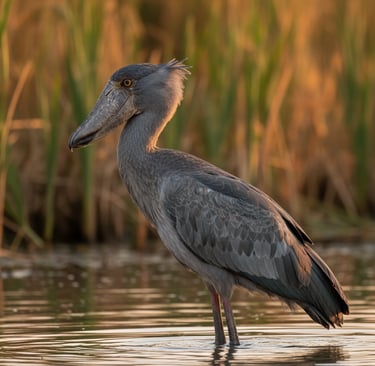
If you've ever seen a shoebill stork, you probably did a double-take. This massive bird looks like it stepped straight out of the Jurassic period, and honestly? That's not far from the truth.
Standing up to five feet tall with a wingspan that can reach over eight feet, the shoebill stork is one of Africa's most prehistoric-looking creatures. But what really sets this bird apart is its absolutely massive bill—shaped like a Dutch clog shoe, which is exactly how it got its name.
Where Do Shoebill Storks Live?
These incredible birds call the wetlands of East Africa home. You'll find them in countries like Uganda, South Sudan, Zambia, and Tanzania, where they wade through papyrus swamps and marshlands looking for their next meal. The good news? If you're planning a wildlife safari to Uganda or Rwanda, there's a decent chance you might spot one of these living dinosaurs in the wild.
What Makes the Shoebill Stork So Special?
Let's talk about that bill for a second. It's not just big—it's a serious piece of hunting equipment. The shoebill's beak can be over nine inches long and four inches wide, with sharp edges and a deadly hook at the tip. This bird means business.
But here's what really freaks people out: shoebills are incredibly patient hunters. They'll stand completely motionless for hours, looking like a statue, waiting for the perfect moment to strike. When they do attack, it's lightning-fast and brutal. Their main prey? Lungfish, but they're not picky—catfish, tilapia, water snakes, and even baby crocodiles are on the menu.
The Shoebill's Quirky Personality
Despite their intimidating appearance, shoebills have some surprisingly endearing behaviors. They're known for bowing to each other as a greeting, and they make this bizarre machine-gun-like clattering sound with their bills instead of traditional bird calls. Seriously, look up a video of a shoebill clacking its bill—it's wild.
These birds are also pretty solitary. Unlike many bird species that flock together, shoebills prefer their own company. They're the introverts of the bird world, only really getting social during breeding season.
Conservation Status: Why We Need to Protect Them
Here's the not-so-fun part. Shoebill storks are classified as vulnerable, with only around 5,000 to 8,000 individuals left in the wild. Their biggest threats? Habitat destruction, disturbance from humans, and getting caught in fishing nets.
The wetlands they depend on are shrinking as agriculture expands and climate change alters these delicate ecosystems. Plus, in some areas, shoebills are captured for the illegal wildlife trade because, well, people want to own a dinosaur bird.
Conservation efforts are underway in several African countries, with organizations working to protect wetland habitats and educate local communities about the importance of these unique birds.
Fun Shoebill Facts You Didn't Know
Ready for some mind-blowing shoebill trivia? These birds can live up to 35 years in the wild. They lay only one or two eggs at a time, and often only one chick survives—survival of the fittest starts early in the shoebill world.
Also, despite being called a "stork," scientists have debated whether shoebills are actually more closely related to pelicans. They're in their own unique family now, which somehow makes them even cooler.
Final Thoughts
The shoebill stork is proof that our planet still has room for creatures that look like they belong in a fantasy novel. These prehistoric-looking birds remind us how diverse and amazing wildlife can be—and why protecting their habitats matters so much.
If you ever get the chance to see a shoebill in person, take it. Standing in front of one of these magnificent birds is an experience you won't forget. Just don't make any sudden movements—remember, they're patient hunters with serious equipment.
Can't get enough of weird and wonderful wildlife? We don't blame you! Check out rarelifeforms.com for your next dose of amazing animal facts and rare species spotlights.
Contact
© 2025. All rights reserved.