Why the Javan Rhino is on the Brink of Extinction
ANIMALS
11/20/20253 min read
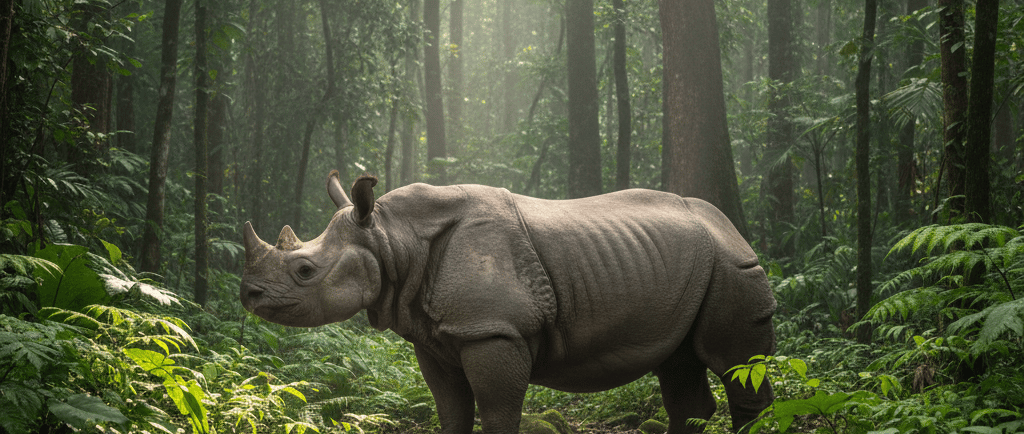
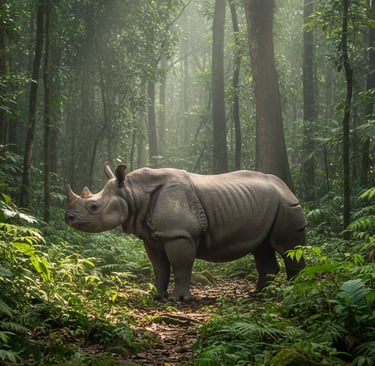
If you've never heard of the Javan rhino, you're not alone. This magnificent creature has become so rare that most people don't even know it exists. And honestly? That's part of the problem.
The Javan rhino is one of the most endangered large mammals on Earth. We're talking about fewer than 80 individuals left in the wild. To put that in perspective, there are more giant pandas, more snow leopards, and definitely more tigers. The Javan rhino is in serious trouble.
What Makes the Javan Rhino Special?
Before we dive into why they're disappearing, let's talk about what makes these animals so incredible. Javan rhinos are smaller than their African cousins, standing about 5 feet tall and weighing up to 5,000 pounds. They have a single horn (unlike African rhinos with two), and their skin looks almost armor-plated with deep folds.
These solitary creatures once roamed across Southeast Asia, from India all the way to Indonesia. Now? They're confined to a single location: Ujung Kulon National Park on the western tip of Java, Indonesia.
The Perfect Storm of Threats
So what went wrong? Unfortunately, it's not just one thing. The Javan rhino has been hit by a perfect storm of threats that have pushed them to the edge.
Poaching Nearly Wiped Them Out
Let's start with the most devastating factor: poaching. Rhino horn has been valued in traditional medicine for centuries, despite having no proven medicinal properties. It's literally made of keratin—the same stuff as your fingernails. But the demand created a black market that hunters couldn't resist.
Throughout the 20th century, poachers decimated Javan rhino populations. By the time conservation efforts ramped up, the damage was already catastrophic.
Habitat Loss Changed Everything
Even if poaching stopped completely tomorrow, Javan rhinos would still face enormous challenges. Their natural habitat has been slashed and burned to make room for agriculture, settlements, and palm oil plantations.
These rhinos need dense tropical forests with plenty of vegetation to munch on. As forests disappeared, so did their ability to find food and shelter. What used to be a vast range across multiple countries is now reduced to one small park.
The Danger of Having All Your Eggs in One Basket
Here's where things get really scary. Every single Javan rhino lives in Ujung Kulon National Park. While protecting them in one place sounds smart, it also means one disaster could wipe out the entire species.
A tsunami, volcanic eruption, disease outbreak, or major fire could eliminate the entire population in a matter of days. Scientists call this "extinction risk," and for the Javan rhino, that risk is extremely high.
Nature's Numbers Game
With such a tiny population, Javan rhinos also face genetic problems. When animals can't breed with diverse partners, genetic diversity drops. This makes the whole population more vulnerable to diseases and reduces their ability to adapt to environmental changes.
It's a vicious cycle: small population leads to genetic problems, which makes it harder for the population to recover.
Is There Any Hope?
Despite these overwhelming challenges, conservationists haven't given up. Park rangers patrol Ujung Kulon National Park 24/7 to prevent poaching. Camera traps help scientists monitor the population and learn about their behavior. There's even talk about establishing a second population in a different location to reduce the "one basket" problem.
But let's be real—the Javan rhino's future hangs by a thread. Without continued protection, funding, and international cooperation, we could lose these incredible animals within our lifetime.
Why Should We Care?
You might wonder why it matters if one species of rhino goes extinct. Here's the thing: every species plays a role in its ecosystem. Javan rhinos are seed dispersers, helping maintain forest health. Their extinction would ripple through the ecosystem in ways we can't fully predict.
Plus, if we can't save a large, charismatic animal that we know about and are actively trying to protect, what does that say about our commitment to the natural world?
The Javan rhino's story is a wake-up call. It shows us how quickly we can lose something irreplaceable when we're not paying attention. The question now is: will we answer that call before it's too late?
Want to learn more about rare and endangered species like the Javan rhino? Visit rarelifeforms.com to discover fascinating stories about the world's most extraordinary and threatened animals. From the smallest insects to the largest mammals, explore the incredible diversity of life hanging in the balance—and find out how you can help protect it.
Contact
© 2025. All rights reserved.